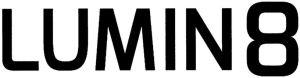
Sll service group, a German company, registered a particular log at EUIPO. The logo , a long line with Lumi8 wrote in bold characters on it was so registered on the 25 of August 2015 , but I just one year the same logo would be opposed by another company Elfa International AB that reports in the test of the opposition that :
– the EU word mark LUMI, which was registered on 3 July 2014 under the number 12591335 and covers ‘metal building materials; small items of metal hardware; fittings of metal for building and furniture; knobs of metal; clothes hooks of metal; rails of metal; doors frames and door panels of metal; metal frames for sliding doors; furniture casters of metal’ in Class 6; ‘building materials (non-metallic); doors, doors panels and door frames, not of metal; cornices, not of metal; wood paneling; cask wood; folding doors, not of metal; sliding doors’ in Class 19, and ‘furniture, mirrors; doors for furniture; lockers; coat hangers; furniture shelves; edgings of plastic for furniture; clothes hooks, not of metal; cases of wood and plastic; furniture casters, not of metal; furniture partitions of wood; furniture fittings, not of metal; cupboard; wardrobes; sliding door wardrobes’ in Class 20;
– the EU figurative mark LUMI Endless possibilities, which was registered on 14 June 2013 under the number 11499928 and covers ‘metal building materials; small items of metal hardware; fittings of metal for building and furniture; knobs of metal; clothes hooks of metal; rails of metal; doors frames and door panels of metal; metal frames for sliding doors; furniture casters of metal’ in Class 6; ‘building materials (non-metallic); doors, doors panels and door frames, not of metal; cornices, not of metal; wood paneling; cask wood; folding doors, not of metal; sliding doors’ in Class 19, and ‘furniture, mirrors; doors for furniture; lockers; coat hangers; furniture shelves; edgings of plastic for furniture; clothes hooks, not of metal; cases of wood and plastic; furniture casters, not of metal; furniture partitions of wood; furniture fittings, not of metal; cupboard; wardrobes;
Could lead to a like hood of confusion.
What does all of this mean? Well:

VS
The opposition moved by the second company (the one of the Lumi Endless possibilities) was based on the Art 196 of the regulation 2017/1001, an important regulation on the ground of copyright law of which we will talk here in the future.
Returning to the case By decision of 14 November 2017, the Opposition Division of EUIPO, basing its decision solely on the earlier EU word mark LUMI (‘the earlier mark at issue’), without it being necessary to examine the other earlier mark relied on, upheld the opposition and rejected the application for registration in respect of all the goods referred above on the ground that there was a likelihood of confusion within the meaning of Article 8(1) (b) of Regulation No 207/2009. This is for saying that for them there was no actual reason to refuse the other brand to use that logo (remember what we had say about design logos…the EUIPO division here is stating that the “Endless design was enough to differentiate one form the). By decision of 28 August 2018 (‘the contested decision’), the Second Board of Appeal of EUIPO dismissed the appeal after having, like the Opposition Division of EUIPO, examined the opposition in the light solely of the earlier mark at issue. In essence, the Board of Appeal found that, even taking into account a higher level of attention on the part of the relevant public, there was a likelihood of confusion within the meaning of Article 8(1)(b) of Regulation 2017/1001, in particular on account of the identity of the goods at issue, the normal degree of distinctiveness of the earlier mark at issue and the overall visual, phonetic and, at least for part of the relevant public, conceptual similarity of the signs at issue. In that regard, the Board of Appeal stated that the presence of the letter ‘n’, the number 8 and the banal figurative elements of the mark applied for were not likely to influence the consumer’s perception and did not call that similarity into question. Furthermore, the Board of Appeal pointed out that, even if the earlier mark at issue were to be considered as having a low degree of distinctiveness for the whole of the relevant public owing to the meaning of the term ‘Lumi’ with regard to the goods at issue, that would not be a sufficient reason to exclude a likelihood of confusion between the marks in question. The applicant relies on a single plea in law alleging infringement of Article 8(1)(b) of Regulation 2017/1001 provides that, upon opposition by the proprietor of an earlier trade mark, the trade mark applied for must not be registered if because of its identity with, or similarity to, the earlier trade mark and the identity or similarity of the goods or services covered by the trade marks, there exists a likelihood of confusion on the part of the public in the territory in which the earlier trade mark is protected. The likelihood of confusion includes the likelihood of association with the earlier trade mark. That plea consists, in essence, of four parts, which relate to the contested decision in so far as that decision concerns, as regards the first part, the visual comparison of the signs at issue, as regards the second part, the phonetic comparison of the signs at issue, as regards the third part, the conceptual comparison of the signs at issue and, as regards the fourth part, the global assessment of the likelihood of confusion. For the purposes of applying Article 8(1) (b) of Regulation 2017/1001, a likelihood of confusion presupposes both that the marks at issue are identical or similar and that the goods or services, which they cover, are identical or similar. The global assessment of the likelihood of confusion must, so far as concerns the visual, phonetic or conceptual similarity of the signs at issue, be based on the overall impression given by the signs, bearing in mind, in particular, their distinctive and dominant elements. The perception of the marks by the consumer of the goods or services in question plays a decisive role in the global assessment of that likelihood of confusion. In this regard, the consumer normally perceives a mark as a whole and does not engage in an analysis of its various details (judgment of 12 June 2007, OHIM v Shaker, C‑334/05). As regards the visual comparison, the Board of Appeal found, in paragraph 44 of the contested decision, that the signs at issue were similar to the extent that they begin with the sequence of letters ‘l’ ‘u’ ‘m’ ‘i’, which constitutes the whole of the earlier mark at issue. By contrast, the Board of Appeal found that the signs differed in the other elements of the mark applied for, such as the additional letter ‘n’ and the number 8 placed at the end of that mark, and the other graphic features of that mark, namely the stylization of the characters. In that regard, it pointed out, that the graphic features of the mark applied for had a limited impact, since the minimalistic stylization of the letters in the element ‘lumin’ and of the number 8 was rather common and was not a particularly eye-catching element. Furthermore, it observed that the circumstance that the element in common, ‘Lumi’, corresponded to the beginning of the mark applied for and was the only element in the earlier mark at issue played an important role, since the identical beginnings were capable of reducing the impact of the additional letter and number which are placed at the end of the mark applied for. It concluded, in paragraph 48 of the contested decision, that there was at least an average degree of visual similarity due to the presence of the element ‘Lumi’, which was placed at the beginning of the mark applied for and was the only element in the earlier mark at issue. Taking under consideration the decision of the Board of Appeal the court states that that the signs at issue differ in some elements, like the additional letter ‘n’ and the number 8 placed at the end of the mark applied for, and in other specific features of that mark’s graphic representation. However, the first four letters of the mark applied for are identical to those of the earlier mark at issue and appear in the same order. Moreover, the earlier mark at issue is fully included in the mark applied for and the mark applied for has four of the five letters of which it consists in common with that earlier mark. It follows that those signs have a significant number of letters in the same position in common. Those similarities will be noticed immediately and easily be remembered by the relevant public. Consequently, the overall impression created by the signs at issue is dominated, in each of those signs, by the fact that they have the same sequence of letters, ‘l’ ‘u’ ‘m’ ‘i’, which constitutes the whole of the earlier mark at issue and the beginning of the mark applied for, in common. According to settled case-law, where a figurative mark containing word elements is compared visually to a word mark, the marks are held to be visually similar if they have a significant number of letters in the same position in common and if the word element of the figurative sign is not highly stylized, notwithstanding the graphic representation of the letters in different fonts, in italics or bold, in lower case or upper case, or in color. In that regard, it must be stated that the similarities between the signs at issue cannot be counteracted by the differences as those differences are secondary and are not therefore sufficient, in the context of an overall visual assessment, to outweigh the similarities. As the Board of Appeal pointed out, the graphic features of the mark applied for have a limited impact, since the minimalistic stylization of the letters in the element ‘lumin’ and of the number 8 is rather commonplace and is not a particularly eye-catching element. First, the word element of the mark applied for is not highly stylized, but has a rather simple style. Secondly, the figurative elements and the graphic structure of that mark are not in any way capable of creating a graphic feature which is particularly striking in the eyes of the relevant public and is capable of attracting its attention. It follows that, as is apparent from the overall impression created by the signs at issue, those signs are visually similar to an average degree overall. Consequently, the Board of Appeal’s assessment, on the basis of the overall impression created by the signs at issue, that there is at least an average degree of visual similarity between those signs is not marred by error, with the result that the first part of the single plea must be rejected. As regards the phonetic comparison of the signs, the Board of Appeal found, in paragraph 49 of the contested decision, that the comparison had to be carried out between the word elements of the signs at issue, namely ‘Lumi’ and ‘lumin8’, taking into account that the figurative elements of the mark applied for had no bearing. It pointed out, in paragraph 50 of that decision, that it was apparent that the pronunciation of those signs coincided in the pronunciation of the identical combination of letters ‘l’ ‘u’ ‘m’ ‘i’, which represent the first part of the mark applied for and is the only element in the earlier mark at issue. By contrast, the Board of Appeal found that, irrespective of their pronunciation in the different languages in the European Union, the signs differed in the sound of the additional letter ‘n’ and the number 8 in the mark applied for. The Board of Appeal concluded that, from a phonetic point of view, there was at least an average degree of similarity between the signs at issue, given that the marks fully coincided as regards the pronunciation of the letter sequence ‘l’ ‘u’ ‘m’ ‘i’, which constitutes the sole element in the earlier mark at issue and the beginning of the mark applied for. It took the view that that fact alone was liable to create strong visual and phonetic similarities between those signs. In that regard, the Board of Appeal found, in paragraph 52 of that decision, that the addition of the number 8, which is included in the mark applied for, could not be sufficient to rule out such visual and phonetic similarities between the two marks, which were created by the presence of the element in common, ‘Lumi’. It found that such an element, regardless of whether it was dominant within the mark applied for, would be liable, being placed at the beginning, to attract the public’s attention more than the number 8 and the additional letter ‘n’ at the end of the word element ‘lumin’ in the mark applied for. In that regard, according to the case-law the phonetic comparison of the signs must be carried out by taking into account the overall impression given by those signs, as the average consumer normally perceives a mark as a whole and does not engage in an analysis of its various details. In the present case, it must be stated, as the Board of Appeal pointed out, that the signs at issue differ in the sounds of the letter ‘n’ and of the number 8 in the mark applied for. However, in the light of the characteristics of the signs at issue namely, in particular the fact that they have in common the same sequence of letters ‘l’ ‘u’ ‘m’ ‘i’, which constitutes the whole of the earlier mark at issue and the beginning of the mark applied for, the overall phonetic impression created by the signs at issue is dominated, in each of those signs, by the fact that their pronunciation coincides fully as regards the element ‘Lumi’, and that is so regardless of the rules of pronunciation used by the relevant public in the territory of the European Union. As the Board of Appeal rightly pointed out, the mere addition of the word element ‘eight’, which is represented in the mark applied for in the form of the number 8, cannot be sufficient to rule out the phonetic similarity between the signs at issue that is created by the identical pronunciation of the element ‘Lumi’, which is common to those signs. In those circumstances, the presence of the number 8 may even make consumers more likely to identify, in the mark applied for, the element ‘Lumi’, which is common to both marks, as a number is clearly distinct from a combination of letters (judgment of 20 February 2018, Kwang Yang Motor v EUIPO — Schmidt (CK1), T‑45/17, not published, EU: T: 2018:85, paragraph 47). Furthermore, it must be stated that, in spite of the fact that the earlier mark at issue consists of two syllables, whereas the mark applied for consists of three, the sound made by the additional letter ‘n’ and number 8, which are placed at the end of the word element ‘Lumi’ in that latter mark, does not create a significant difference in the overall phonetic impression created by the signs at issue. The sound produced by those additional elements is not sufficient, in the context of an overall phonetic assessment, to outweigh the similarity of those signs, which is characterized by the fact that they have the sound arising from the pronunciation of the same element ‘Lumi’, which is situated at the beginning of those signs, in common. It follows that, as is apparent from the overall impression created by the signs at issue, those signs are phonetically similar to an average degree overall. Consequently, the Board of Appeal’s assessment, on the basis of the overall impression created by the signs at issue, that those signs are phonetically similar to at least an average degree, is not marred by error, with the result that the second part of the single plea must be rejected. As regards the conceptual comparison of the signs at issue that some consumers in the European Union might understand the common word elements ‘Lumi’ and ‘lumin’ as allusive of ‘light’ because of the Latin, word ‘lumen’. It stated that those were, in particular, consumers who speak English (‘luminous’), French (‘lumineux’, ‘la lumière’), Spanish (‘luminoso’, ‘la lumbre’) or Italian (‘luminoso’, ‘il lume’). It found that therefore, in respect of that part of the relevant public, there was a conceptual similarity between those signs to the extent that they evoked the concept of ‘light’. The Board of Appeal, however, stated, in paragraph 55 of that decision, that a significant part of the relevant public in the European Union would not link the word elements ‘lumi’ and ‘lumin’ to the concept of ‘light’. It found that that concerned, in particular, the part of the public which does not speak English or a Romance language, including consumers, for example, from Poland. The Board of Appeal also pointed out that, as regards the part of the relevant public that was likely to perceive the concept of ‘light’ in the element ‘lumi’ in the earlier mark at issue and the element ‘lumin’ of the mark applied for, there would be at least a low degree of conceptual similarity between the signs at issue. In that regard, it stated that the number 8 did not convey any specific concept and would not alter the conceptual similarity between the terms ‘lumi’ and ‘lumin’. The Board of Appeal also pointed out, in paragraph 57 of that decision, that, as regards the remainder of the relevant public, which would not understand the meaning of the terms ‘lumi’ and ‘lumin’, the signs at issue would be viewed as fanciful terms, with the result that no conceptual comparison could be made. In the present case, it must be stated, as the Board of Appeal pointed out that part of the relevant public in the European Union might understand the terms ‘lumi’ and ‘lumin’ as alluding to ‘light’ on account of the Latin word ‘lumen’. That could be the case as regards the relevant public that speaks, in particular, English (‘luminous’), French (‘lumineux’ or ‘lumière’), Spanish (‘luminoso’ or ‘lumbre’) or Italian (‘luminoso’ or ‘lume’). Consequently, as regards that part of the relevant public that is likely to perceive the concept of ‘light’ in the element ‘lumi’ of the earlier mark at issue and in the element ‘lumin’ of the mark applied for, there would be at least a low degree of conceptual similarity between the signs at issue. In that regard, it must be stated that the number 8, attached to the term ‘lumin’, does not convey any specific concept, as has been pointed out in paragraph 49 above, and cannot therefore alter that similarity between the terms ‘lumi’ and ‘lumin’. However, it must also be stated that another part of the relevant public in the European Union might not be able to link the terms ‘lumi’ and ‘lumin’ to the concept of ‘light’. That could be the case as regards the relevant public which does not speak, in particular, English or a Romance language. Consequently, as far as that public which does not understand the meaning of the terms ‘lumi’ and ‘lumin’ is concerned, those terms will be perceived as fanciful and it is therefore impossible to make a conceptual comparison of the signs at issue. As regards the applicant’s argument that the mark applied for LUMIN8 can be construed by the relevant public, depending on how it is pronounced, as meaning ‘nuit de lumière’ or ‘Lichtnacht’ or even ‘light night’ and therefore has nothing to do conceptually with the term ‘lumi’, it must be held that that interpretation is unrealistic. Furthermore, that interpretation requires the relevant public concerned to make a mental effort in order to arrive at that meaning. It must be stated that the association of the elements ‘lumin’ and ‘8’ invoked by the applicant does not result in a clear and specific meaning being attached to the mark applied for. However, according to the case law, conceptual differences between two signs are capable of counteracting visual and phonetic similarities between them only if at least one of those signs has a clear and specific meaning for the relevant public, so that that public is capable of grasping it immediately; Consequently, that argument on the part of the applicant cannot reasonably succeed. According to settled case-law, the risk that the public may believe that the goods or services in question come from the same undertaking or from economically linked undertakings constitutes a likelihood of confusion. According to that case-law, the likelihood of confusion must be assessed globally, according to the relevant public’s perception of the signs and goods or services in question and taking into account all factors relevant to the circumstances of the case. A global assessment of the likelihood of confusion implies some interdependence between the factors taken into account and, in particular, between the similarity of the trademarks and that of the goods or services covered. Accordingly, a low degree of similarity between those goods or services may be offset by a high degree of similarity between the marks, and vice versa. For the purposes of that global assessment, the average consumer of the category of goods concerned is deemed to be reasonably well informed and reasonably observant and circumspect. However, account should be taken of the fact that the average consumer only rarely has the chance to compare the various marks directly and must therefore rely on his imperfect recollection of them. It should also be borne in mind that the average consumer’s level of attention is likely to vary according to the category of goods or services in question. As regards the applicant’s argument that the lack, in the present case, of phonetic and conceptual similarity between the signs at issue counteracts any low degree of visual similarity that there might be, it is sufficient to state, as has been examined in the context of the comparison of the signs that, since there is, on the contrary, an average degree of visual and phonetic similarity and, at least for part of the relevant public, a low degree of conceptual similarity between the signs at issue, the Board of Appeal was fully entitled to find, in paragraph 58 of the contested decision, that, ‘overall’, the signs at issue were ‘similar to an average degree’. The counteraction invoked by the applicant could not therefore apply. Consequently, that argument cannot reasonably succeed. In the present case, in view of all the factors relevant in the context of a global assessment of the likelihood of confusion between the marks at issue and, in particular, of the identity of the goods at issue and the normal degree of distinctiveness of the earlier mark at issue , it must be held that there is a likelihood of confusion between the marks at issue on the part of the relevant public referred to in paragraph 18 above, even when a higher level of attention on the part of that public is taken into account. Consequently, the Board of Appeal was fully entitled to find, without infringing Article 8(1) (b) of Regulation 2017/1001, in the context of a global assessment of the likelihood of confusion, that, even taking into account a higher level of attention on the part of the relevant public, there was, in the present case, a likelihood of confusion between the marks at issue. It follows that the Board of Appeal’s assessment of the factors that are relevant with regard to the global assessment of the likelihood of confusion is not marred by error, with the result that the fourth part of the single plea must also be rejected. Moreover, it must be pointed out, as observed by the Opposition Division and the Board of Appeal of EUIPO, that there is no need to examine the applicant’s arguments concerning the other earlier mark, namely the earlier EU figurative mark LUMI Endless possibilities. Since a likelihood of confusion with regard to only one earlier mark is sufficient to uphold the opposition on the basis of Article 8(1)(b) of Regulation 2017/1001 and the Court has held, in paragraph 73 above, that the Board of Appeal was fully entitled to find, without infringing that provision, that there was such a likelihood of confusion between the mark applied for and the earlier mark at issue, namely the earlier EU word mark LUMI, those arguments must be held to be ineffective, inasmuch as they cannot lead to the annulment of the contested decision in that regard.
COMMENT
What interest us here is the same principle that we have established with the previous post : not only how to interpretation the eye of the consumer in order to know if any confusion could be generated , but even objectively analyzing the two brands from a visual , phonetical and conceptual view. It is here interesting the language analysis of the court, in order to understand if the two phonetical meaning could be confused, and if the concept was so. This Link between the concept, the word and the visual in a descent scale is a really interesting topic indeed and seems to suggest not only a relation between the three sides of the proofs but even an epistemological view (indeed the court first analyses the visual, then from here goes for the words, and then for the concept, cumulating them and not giving any hierarchical importance, but evaluating the whole of them).
 Euro Case Law