On 20 October 1999, Shaker filed an application for a Community trademark with OHIM for the following figurative mark:
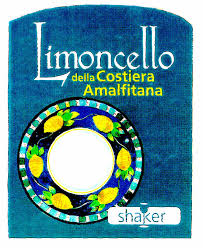
On 1 June 2000 Limiñana y Botella, SL filed a notice of opposition. The ground relied on in support of the opposition was the likelihood of confusion referred to in Article 8(1) (b) of Regulation No 40/94. By decision of 9 September 2002, the OHIM Opposition Division upheld the opposition and consequently refused registration of the mark claimed. In the disputed decision the Second Board of Appeal of OHIM, to which Shaker had referred, rejected the latter’s application. In essence, the Board considered that the dominant element of the mark for which registration was sought was the term ‘Limoncello’ and that that mark and the earlier trade mark were visually and phonetically very similar to one another, so that there was a likelihood of confusion. On 7 January 2004, Shaker brought an action before the Court of First Instance seeking annulment of the disputed decision, pleading, firstly, an infringement of Article 8(1) (b) of Regulation No 40/94, secondly, a misuse of powers and, thirdly, an infringement of the duty to provide reasons. As regards the first plea in law, the Court of First Instance, after establishing the similarity between the products at issue, held in paragraphs 53 and 54 of the judgment under appeal, concerning the opposing signs:
‘53 [T]he Board of Appeal had to consider which component of the trade mark claimed was apt, by virtue of its visual, phonetic or conceptual characteristics, to convey, by itself, an impression of that mark which the relevant public keeps in mind, with the result that all the other components of the mark are negligible in that respect … .
54 However, if the trade mark claimed is a complex mark which is visual in nature, the assessment of the overall impression created by that mark and the determination as to whether there is any dominant element must be carried out on the basis of a visual analysis. Accordingly, in such a case, it is only to the extent to which a potentially dominant element includes non-visual semantic aspects that it may become necessary to compare that element with the earlier mark, also taking into account those other semantic aspects, such as for example phonetic factors or relevant abstract concepts.’
Following this approach, the Court of First Instance held, at paragraph 59 of the judgment under appeal, that the representation of the round dish decorated with lemons was clearly the dominant component of the mark for which registration was sought. It established that the word elements of that mark were not dominant on a visual level and held that there was no need to analyze the phonetic and conceptual characteristics of those elements. Consequently, at paragraph 65 of that judgment, it held that the representation of the round dish had nothing in common with the earlier trade mark which is purely a word mark. In paragraphs 66 to 69 of the judgment the Court of First Instance held:
‘66 there is therefore no likelihood of confusion between the trademarks in question. The dominance of the figurative representation of a round dish decorated with lemons in comparison with the other components of the mark claimed prevents any likelihood of confusion arising from visual, phonetic or conceptual similarities between the words “limonchelo” and “limoncello” which appear in the marks at issue.
67 In the context of the global assessment of the likelihood of confusion, it should also be observed that the average consumer has only occasionally the opportunity to carry out a direct comparison of the various trademarks but must rely on his imperfect mental image of them … Thus, the dominant element of the trade mark claimed (the round dish decorated with lemons) is of major importance in the overall assessment of the sign because the consumer looking at a label for a strong alcoholic drink takes notice of, and remembers, the dominant element of the sign, which enables him to repeat the experience on the occasion of a subsequent purchase.
68 The dominance of the figurative component (a round dish decorated with lemons) in the mark claimed means that in this instance the assessment of the distinctive elements of the earlier trade mark does not affect the application of Article 8(1)(b) of Regulation No 40/94. Although the degree of distinctiveness of an earlier word mark may affect the assessment of the likelihood of confusion … that requires that there be, at the very least, some likelihood of confusion between the earlier trade mark and the mark claimed. However, it is clear from the overall assessment of the likelihood of confusion between the trade marks at issue that the dominance, in the case of the mark claimed, of a round dish decorated with lemons prevents there being any likelihood of confusion with the earlier trade mark. Consequently, there is no need to adjudicate on the distinctiveness of the earlier trade mark …
69 In the light of those considerations, the Court must hold that, notwithstanding the fact that the goods concerned are identical, there is not a sufficiently high degree of similarity between the trade marks in question for a finding that the Spanish reference public might believe that the goods in question come from the same undertaking or, as the case may be, from economically-linked undertakings. Accordingly, contrary to OHIM’s finding in the contested decision, there is no likelihood of confusion between them within the meaning of Article 8(1) (b) of Regulation No 40/94.’
Therefore, the Court of First instance accepted the first plea, held that there was no need to examine the other pleas in law and annulled the disputed decision. It also altered it, holding the appeal by Shaker before OHIM to be justified, so that the opposition had to be rejected. In support of its appeal OHIM raised two pleas in law but withdrew the second in the course of the proceedings before the Court following a rectification by order of 12 June 2006 by the Court of First Instance. It is therefore necessary to examine only one plea in law.
In the present case, the pleas raised by OHIM concern a question of law, in that it seeks to demonstrate that the Court of First Instance misinterpreted the scope of Article 8(1) (b) of Regulation No 40/94, insofar as it limited itself to a visual analysis of the marks at issue and did not proceed to a phonetic and conceptual assessment of those marks. Regarding this it should be recalled that, pursuant to this provision, upon application by the owner of an earlier trade mark, the trade mark applied for is refused registration when, by reason of its identical nature or its similarity with the earlier trade mark and by reason of the identical nature or similarity of the goods or services covered by the two trademarks, there is a likelihood of confusion on the part of the public in the territory where the earlier trade mark is protected. Such a risk of confusion includes the risk of association with the earlier trade mark. On this point, the Community legislature explained, in the seventh recital of Regulation No 40/94, that the appreciation of the likelihood of confusion depends on numerous elements and, in particular, on the recognition of the trade mark on the market, the association which can be made with the used or registered sign, the degree of similarity between the trade mark and the sign and between the goods or services identified. In this regard, it is settled case-law that the risk that the public might believe that the goods or services in question come from the same undertaking or, as the case may be, from economically-linked undertakings, constitutes a likelihood of confusion within the meaning of Article 8(1)(b) of Regulation No 40/94. According to further settled case-law, the global assessment of the likelihood of confusion, in relation to the visual, aural or conceptual similarity of the marks in question, must be based on the overall impression given by the marks, bearing in mind, in particular, their distinctive and dominant components. The perception of the marks by the average consumer of the goods or services in question plays a decisive role in the global appreciation of that likelihood of confusion. In this regard, the average consumer normally perceives a mark as a whole and does not proceed to analyze its various details. It should be added that in order to assess the degree of similarity between the marks concerned, it is necessary to determine the degree of visual, aural or conceptual similarity between them and, where appropriate, to assess the importance to be attached to those various factors, taking account of the category of goods or services in question and the circumstances in which they are marketed. In the present case the Court of First Instance, at paragraph 49 of the judgment under appeal, noted the case-law mentioned in paragraph 35 of the present judgment according to which the global appreciation of the likelihood of confusion must be based on the overall impression created by the signs at issue. However if the trade mark claimed was a complex mark which was visual in nature, the assessment of the overall impression created by that mark and the determination as to whether there was a dominant element had to be carried out on the basis of a visual analysis. It added that, in such a case, it was only to the extent to which a potentially dominant element included non-visual semantic aspects that it might become necessary to compare that element with the earlier mark, also taking into account those other semantic aspects, such as for example phonetic factors or relevant abstract concepts. On the basis of those considerations, the Court of First Instance, in the context of the analysis of the signs at issue, firstly held that the mark for which registration was sought contained a dominant element comprising the representation of a round dish decorated with lemons. It then inferred that it was not necessary to examine the phonetic or conceptual features of the other elements of that mark. It finally concluded that the dominance of the figurative representation of a round dish decorated with lemons in comparison with the other components of the mark prevented any likelihood of confusion arising from the visual, phonetic or conceptual similarities between the words ‘limonchelo’ and ‘limoncello’ which appear in the marks at issue. However, in so doing, the Court of First Instance did not carry out a global assessment of the likelihood of confusion of the marks at issue. It is important to note that, according to the case-law of the Court, in the context of consideration of the likelihood of confusion, assessment of the similarity between two marks means more than taking just one component of a composite trade mark and comparing it with another mark. On the contrary, the comparison must be made by examining each of the marks in question as a whole, which does not mean that the overall impression conveyed to the relevant public by a composite trade mark may not, in certain circumstances, be dominated by one or more of its components, it is only if all the other components of the mark are negligible that the assessment of the similarity can be carried out solely on the basis of the dominant element. In those circumstances, OHIM is right to maintain that the judgment under appeal is vitiated by an error in law and it is necessary to refer the case back to the Court of First Instance and to reserve the costs.
COMMENT
In this case, we have a first definition by the court of how the analysis of the similarities or the likelihood of confusion must be done. Remember that this moment is central in the determination of whether a trade mar could be accepted or not as individual or original. The importance of this moment in the determination lead to a deep analysis of the two designs , from a visual , conceptual and phonetical view , in order to know if the consumer would be misguided. Take notice that tin a previous post we had talked about the type of customer that need to be imagined in this process , as an average user with no technical expertise.
 Euro Case Law